
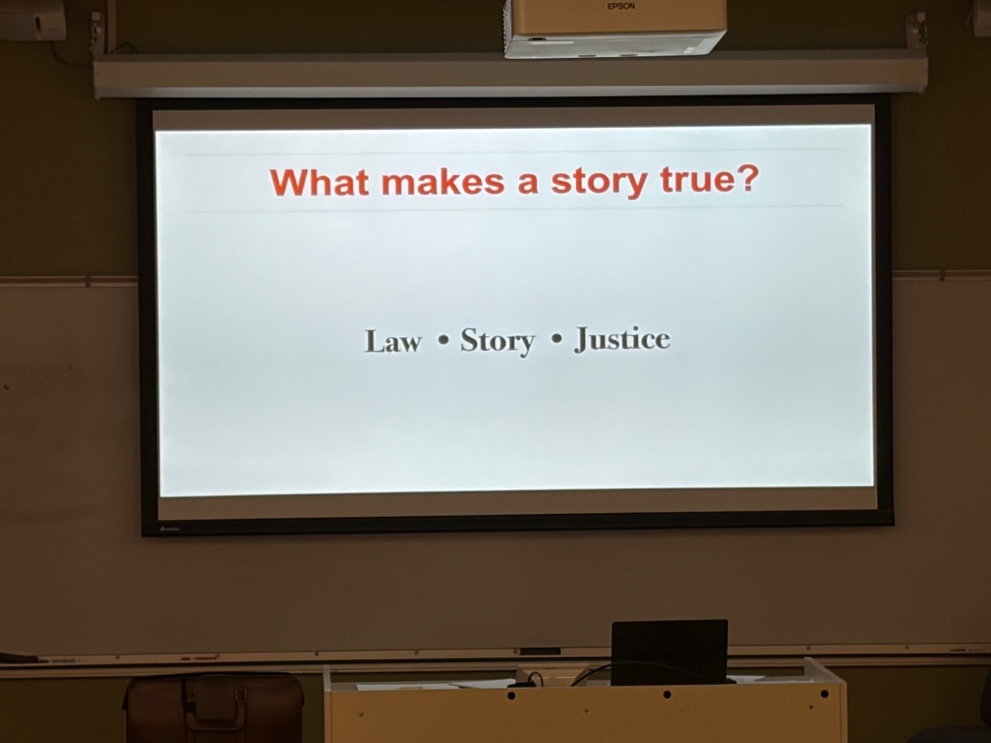
Three weeks into our Law, Film & Culture class at Capital University Law School, a question on the screen captures much of what we’ve been exploring so far:
What makes a story true?
This week we turned to The Burial, a film about the role storytelling plays in legal advocacy.
Lawyers work with facts, of course, but facts rarely arrive already organized into a story. We decide where to begin, what deserves emphasis, whose perspective matters, and how individual facts connect to something larger.
Which raises a harder question: can a story contain only true facts and still be misleading?
Our discussion moved from The Burial to an actual case from practice, telling the same events from competing points of view, and changing the order in which the facts were revealed. Nothing about the fact changed. But our understanding of responsibility, fairness, and even who we were rooting for sometimes did.
That may be one of the central tensions in legal storytelling. Lawyers are advocates, and perspective and framing are unavoidable. But the best advocacy does more than persuade.
It gives facts meaning without losing fidelity to the truth.

